Power outage hits, your phone dies, and you’ve got no backup. Or you’re at a campsite, the sun went down two hours ago, and your cooler is running low. A portable power station solves both problems — a rechargeable battery with real AC outlets, USB ports, and enough juice to run small appliances for hours.
The market exploded over the last three years. In 2026, you can get a solid 256–288Wh LiFePO4 power station with fast charging for under $200 — options that would have cost $400+ in 2022. We ranked the best under $300 so you don’t waste money on outdated tech.
Disclosure: This post contains affiliate links. If you purchase through our links, we may earn a small commission at no extra cost to you.
Quick Comparison: Best Portable Power Stations Under $300
| Model | Price | Capacity | AC Output | Battery | Best For |
|---|---|---|---|---|---|
| EF EcoFlow RIVER 2 | $189 | 256Wh | 300W (600W boost) | LiFePO4 | Best overall |
| Jackery Explorer 300 Plus | ~$249 | 288Wh | 300W | LiFePO4 | Best longevity |
| Bluetti EB3A | ~$199 | 268Wh | 600W (1200W surge) | LiFePO4 | Highest AC output |
| Anker SOLIX C200 DC | ~$179 | 192Wh | DC/USB only | LiFePO4 | Laptop/phone only |
| Goal Zero Yeti 200X | $299 | 187Wh | 120W (200W surge) | NMC | Premium build quality |
1. EF EcoFlow RIVER 2 — Best Overall ($189)
Best for: Campers and emergency backup users who need fast recharging
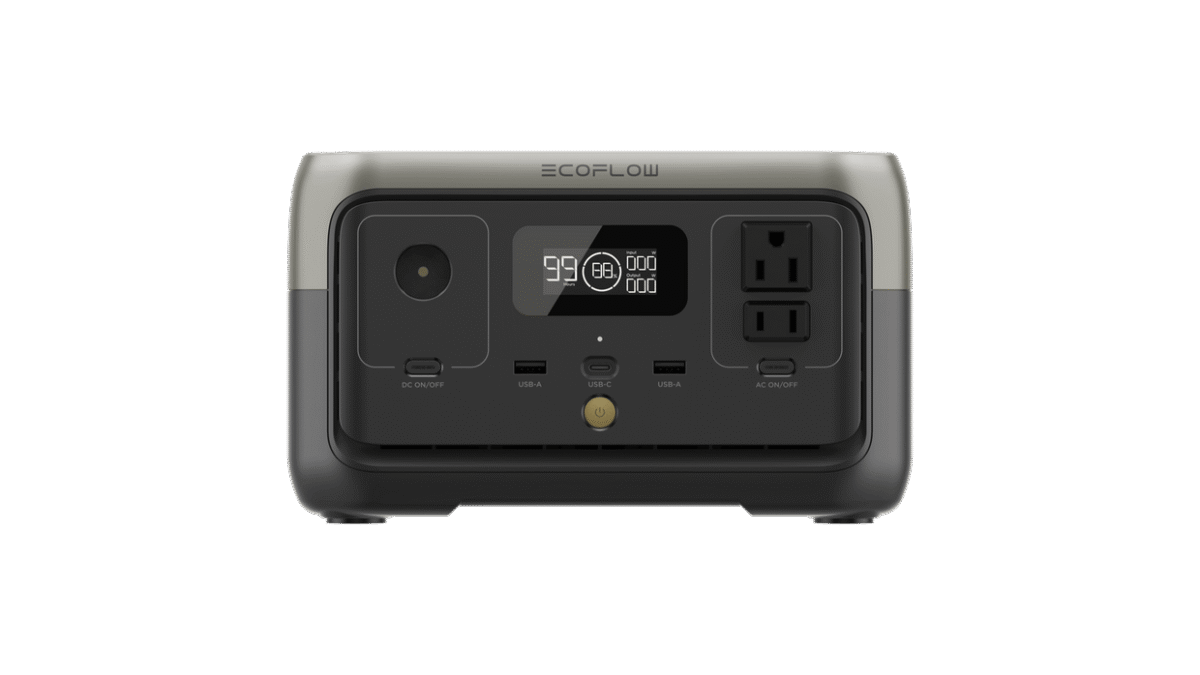
The EF EcoFlow RIVER 2 recharges fully in 1 hour from a standard AC outlet — the fastest in this price range by a significant margin. Its LiFePO4 battery lasts 3,000+ charge cycles (compared to ~500 for older NMC batteries), meaning it could last a decade of daily use. The X-Boost feature intelligently powers appliances up to 600W rated draw, effectively doubling the usable wattage from its 300W inverter. At $189, nothing comes close.
- Capacity: 256Wh
- AC output: 300W (600W with X-Boost)
- Charge time: ~1 hour (0–100%)
- Battery type: LiFePO4 (3,000+ cycles)
- Outlets: 2 AC + 2 USB-C + 2 USB-A
- Weight: 7.7 lbs
Pros: Fastest charge in class (1h), X-Boost extends usable wattage, LiFePO4, lightweight at 7.7 lbs
Cons: 256Wh is mid-range capacity, AC output limited to 300W native
2. Jackery Explorer 300 Plus — Best Longevity (~$249)
Best for: Long-term buyers who want the most durable investment
Jackery’s proprietary ChargeShield technology uses a 62-step adaptive algorithm to reduce heat and optimize charge current — the result is a rated lifespan of 3,000+ cycles and approximately 10 years of daily use. The two 100W USB-C ports are genuinely useful for charging laptops and tablets simultaneously. Jackery’s brand reputation and customer support also give it an edge over newer entrants.
- Capacity: 288Wh (largest in this roundup)
- AC output: 300W
- Charge time: ~2 hours (AC)
- Battery type: LiFePO4 (3,000+ cycles)
- Outlets: 1 AC + 2 USB-C (100W each) + 1 USB-A
- Weight: 8.27 lbs
Pros: Largest capacity (288Wh), ChargeShield longevity tech, dual 100W USB-C, trusted brand
Cons: Slower charge than EcoFlow (2h vs 1h), fewer AC outlets (1 vs 2)
3. Bluetti EB3A — Highest AC Output (~$199)
Best for: Users who need to power higher-wattage appliances during outages
The Bluetti EB3A stands out with 600W continuous AC output and 1,200W surge capacity — nearly double the AC output of the EcoFlow RIVER 2 and Jackery 300 Plus. It’s also the only unit here with a built-in 15W wireless charging pad. The LiFePO4 battery charges from 0–100% in about 1 hour and 18 minutes. If you plan to power appliances during outages, the EB3A’s headroom matters.
- Capacity: 268Wh
- AC output: 600W continuous (1,200W surge)
- Charge time: ~1h 18min (0–100%)
- Battery type: LiFePO4
- Outlets: 2 AC + 1 USB-C + 2 USB-A + 15W wireless pad
- Weight: 10.14 lbs (heaviest in roundup)
Pros: Highest AC output (600W/1200W surge), built-in wireless charging, fast charge, LiFePO4
Cons: Heaviest at 10.14 lbs, heavier for backpacking use
4. Anker SOLIX C200 DC — Best for Laptops & Phones (~$179)
Best for: Laptop workers, vanlifers, and anyone who only needs USB-C power delivery
The Anker SOLIX C200 DC is the lightest option here at 6 lbs, with a 140W USB-C port that charges a MacBook Pro in ~80 minutes. The critical note: it has no AC outlet — this is a USB/DC-only power bank. If you need to plug in AC appliances, look elsewhere. But if you primarily need to keep laptops and phones alive during outages or travel, it’s the smallest and lightest LiFePO4 option available.
- Capacity: 192Wh
- AC output: None (DC/USB only)
- Charge time: ~1.3h (0–80%, 140W USB-C)
- Battery type: LiFePO4
- Outlets: 3 USB-C (140W/100W/15W) + 2 USB-A
- Weight: 6 lbs (lightest)
Pros: Lightest in roundup (6 lbs), 140W USB-C fast charge, LiFePO4, Anker reliability
Cons: No AC outlet — cannot run any AC appliances
5. Goal Zero Yeti 200X — Premium Build Quality ($299)
Best for: Goal Zero ecosystem users who need the 6mm port and premium build
The Goal Zero Yeti 200X uses anodized aluminum construction that feels genuinely premium — nothing else in this roundup comes close in build quality. It’s also the lightest at 5 lbs. However, at $299 it offers the least capacity (187Wh), oldest battery chemistry (NMC instead of LiFePO4), slowest AC charge (~5 hours), and lowest AC output (120W) of anything here. Unless you’re already in the Goal Zero ecosystem, the EcoFlow RIVER 2 at $189 is a significantly better deal.
- Capacity: 187Wh (lowest in roundup)
- AC output: 120W (200W surge)
- Charge time: ~5 hours (AC) — slowest here
- Battery type: NMC (older chemistry, ~500 cycles)
- Outlets: 1 AC + 1 USB-C 60W + 2 USB-A + 12V car port + 6mm
- Weight: 5 lbs
Pros: Premium aluminum build, lightest overall (5 lbs), Goal Zero ecosystem compatibility
Cons: Worst value in roundup — highest price, lowest capacity, NMC chemistry, slowest charge
Which Portable Power Station Should You Buy?
- Best overall: EF EcoFlow RIVER 2 ($189) — fastest charge (1h), LiFePO4, X-Boost, best price-to-performance
- Best longevity: Jackery Explorer 300 Plus (~$249) — 288Wh, ChargeShield, 10-year rated lifespan
- Highest AC output: Bluetti EB3A (~$199) — 600W/1200W surge, wireless charging pad
- Phones/laptops only: Anker SOLIX C200 DC (~$179) — no AC, but lightest and great USB-C
- Premium build: Goal Zero Yeti 200X ($299) — best construction, but weakest value
Frequently Asked Questions
How many watts do I need for camping?
For basic camping (phone charging, LED lights, small fan): 100–150Wh is enough. For a mini-fridge or CPAP machine: 500Wh+. For a full weekend trip with multiple devices: 256–300Wh (like the EcoFlow RIVER 2 or Jackery 300 Plus) is the sweet spot under $300.
Can a portable power station run a refrigerator?
A mini-fridge or 12V cooler: yes. A full-size home refrigerator (800–1200W): no — the models in this roundup top out at 600W AC output (Bluetti EB3A). You’d also drain any 200–300Wh station in under 30 minutes running a full-size fridge.
What’s the difference between LiFePO4 and NMC batteries?
LiFePO4 (lithium iron phosphate) lasts 2,000–3,000+ charge cycles before significant degradation — roughly 5–10 years of daily use. NMC (nickel manganese cobalt) lasts 500–800 cycles, about 1–2 years of daily use. In 2026, nearly all quality portable power stations use LiFePO4. The Goal Zero Yeti 200X is one of the last holdouts using NMC chemistry, which is a significant concern at its $299 price.
How long does a portable power station last on a full charge?
It depends on what you’re running. A phone (15–20Wh): 10–15 charges from a 256Wh station. A laptop (50–70Wh per charge): 3–5 full charges. A mini-fridge (35–60W): 4–7 hours. A CPAP machine (30–60W): 4–8 hours. These are estimates — actual runtime varies by appliance efficiency and ambient temperature.
Deixe um comentário