How to Choose a Smart Ring in 2026 (And Why They’re Replacing Fitness Trackers)
Disclosure: This post contains affiliate links. If you buy through our links, we may earn a commission at no extra cost to you.
The average smart ring owner replaces their fitness tracker within six months of switching — and almost none go back. That stat, drawn from user surveys across Reddit’s r/SmartRings and multiple product review threads, tells you something the marketing decks won’t: smart rings aren’t a gimmick category chasing wearables leftovers. They’re eating the low-profile fitness tracker market from below, and in some cases, they’re producing clinical-grade health data that dedicated devices at twice the price can’t match — which is exactly what this guide to how to choose a smart ring in 2026 aims to answer.
But buying one blindly is a mistake you’ll wear for years. Literally. The ring size you choose is permanent to that device, sizing kits are frequently skipped, and the subscription economics of some products will quietly cost you more than a flagship smartwatch over a six-year ownership cycle.
In this guide, you’ll learn exactly what separates good smart ring hardware from overhyped hardware, how to model total cost of ownership before you buy, and which options in 2026 make the most sense for different types of users. We’ll also cover the patent wars reshaping the market, because they directly affect which devices you can actually buy today.
What Makes Smart Rings Different from Smartwatches
The fundamental difference isn’t form factor — it’s the sensor contact geometry. A ring worn on the finger sits over the digital arteries, which run closer to the skin surface than the radial artery at the wrist. This proximity means PPG (photoplethysmography) readings — the optical heart rate and SpO2 measurements that underpin most health tracking — are often cleaner and more consistent than wrist-based equivalents, especially during sleep.
Sleep tracking is where smart rings genuinely outperform. A smartwatch shifts on the wrist during sleep, loosens, rotates. A properly sized ring stays in fixed contact with the finger through every sleep stage. The result is more accurate REM/deep sleep stage detection, better HRV (heart rate variability) capture during the early morning hours, and — as of 2025–2026 — validated sleep apnea screening in at least one major device (the RingConn Gen 2, with FDA-cleared SpO2 monitoring parameters).
What smart rings sacrifice is display and interaction. There’s no screen, no notifications, no tap-to-dismiss an alarm. The ring is a passive data collection node; your smartphone does all the interpretation. This makes them a terrible replacement for someone who needs glanceable information throughout the day. It makes them an excellent replacement for anyone who finds a smartwatch uncomfortable to sleep in, aesthetically too loud for professional settings, or simply excessive for their actual use case (which for most people is: heart rate, steps, sleep, and the occasional stress check).
The other divergence is battery life. Without a display to power, smart rings achieve 7–12 days of continuous use between charges, compared to 1–3 days for most full-featured smartwatches. For travelers or people who forget to charge nightly, this is a material quality-of-life difference.
If you want a broader look at wrist-based alternatives, our guide to the best smartwatch under $200 covers the strongest options in that category.
How to Choose a Smart Ring: Key Features to Compare (Battery, Sensors, Subscriptions, and Sizing)
Battery Life
Rated battery life in smart rings is reasonably accurate in real-world use, which isn’t always true for smartwatches. The RingConn Gen 2 consistently hits 10–12 days in user reports, even with continuous heart rate and SpO2 monitoring enabled. The Oura Ring 4 lands around 8 days. The Samsung Galaxy Ring posts about 7 days.
The variance matters less than you’d think at first. All three require a charge roughly once a week. The real battery consideration is what happens to your data during charging — most rings don’t track during charge, so a nightly charger who charges for 90 minutes in the afternoon loses nothing. A user who charges weekly and forgets may lose a sleep night.
Sensors
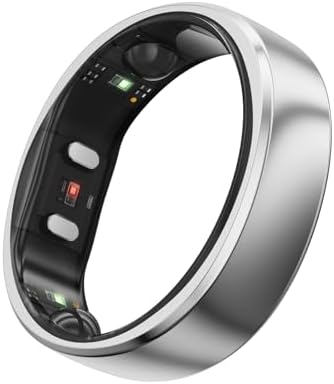
All three leading devices in 2026 include: optical PPG for heart rate and SpO2, accelerometer/gyroscope for movement and step counting, and skin temperature sensing. The differentiators are in implementation quality and what the software does with the raw data.
Oura has the longest dataset and the most validated algorithms, particularly for readiness scoring and cycle tracking. Their app remains the best in class for data presentation and longitudinal trend analysis. The SpO2 accuracy lawsuit pending against Oura (a class action alleging systematic overestimation in certain skin tones) is worth watching but hasn’t produced a ruling as of mid-2026.
RingConn Gen 2 is the most significant hardware story of the past 18 months. After being pulled from US sale following Oura’s patent enforcement campaign, RingConn returned to the American market in early 2026 following a settlement. Their second-generation hardware added validated sleep apnea detection using continuous SpO2 monitoring — a feature that genuinely moves the device from “fitness tracker” to “health screening tool” for a subset of users with suspected sleep-disordered breathing.
Samsung Galaxy Ring leans heavily on ecosystem integration. If you’re in a Galaxy ecosystem (Galaxy Watch, Samsung phone, Samsung Health), the ring operates as a secondary biometric node that enhances the accuracy of your existing data — particularly for sleep scoring and body battery metrics. As a standalone device for non-Samsung users, it’s competent but not exceptional.
Subscriptions
This is the most consequential variable in the buying decision, and we’ll cover it in depth in the next section. The short version: RingConn Gen 2 has no subscription. Samsung Galaxy Ring has no subscription. Oura Ring 4 requires $5.99/month (or $69.99/year) to access the full app feature set — see Oura’s subscription page for the current pricing tiers. Without a subscription, Oura’s data access is significantly limited.
Sizing
Smart rings do not resize. When you buy a ring, you’re committing to a size for the life of the device. Most manufacturers sell (or include) a sizing kit — a set of plastic rings you wear for 24–48 hours under varying conditions to determine your accurate fit. This step is not optional, and we’ll cover it separately below.
The Subscription Trap — Total Cost of Ownership Over 3 Years
“Subscription fatigue” is not a phrase marketers invented — it’s consistently the #1 user complaint across smart ring communities on Reddit, YouTube comments, and app store reviews. And when you run the numbers, the frustration is mathematically justified.
Consider Oura Ring 4. The hardware lists at $399. The subscription is $5.99/month or $69.99/year. Over three years at the annual rate:
- Hardware: $399
- 3 years of subscription: $209.97
- Total: ~$609
Over six years (a realistic lifespan for hardware this durable, assuming you don’t upgrade):
- Hardware: $399
- 6 years of subscription: $419.94
- Total: ~$819 — more than twice the hardware price
Compare that to RingConn Gen 2 at $299 with zero ongoing fees. Over six years, your TCO is $299. The delta is $520 in subscription fees alone — enough to buy two additional RingConn units or fund a different health tracking investment entirely.
Samsung Galaxy Ring at $299.99 with no subscription lands at the same zero-subscription TCO model, though Samsung’s track record on software support for older hardware is mixed; expect meaningful feature updates to slow after 3–4 years.
- RingConn Gen 2: $299 total — no subscription, 12-day battery, sleep apnea detection
- Samsung Galaxy Ring: $299.99 total — no subscription, Galaxy ecosystem required for best value
- Oura Ring 4: ~$819 total (hardware + 6 years subscription) — best app, best data history, SpO2 lawsuit pending
If you value best-in-class software and have a strong preference for Oura’s app experience, the premium may be worth it. If you want hardware value and don’t need the deepest longitudinal analytics, the no-subscription options are compelling in 2026 in ways they weren’t two years ago.
The important nuance: Oura’s app quality and algorithm maturity is genuinely ahead of the competition. Their readiness scores, period prediction accuracy, and data export capabilities are meaningfully better than what RingConn and Samsung currently offer. The question is whether that software advantage is worth $70–$72/year indefinitely. For users who actively engage with health data analytics daily, it may be. For users who glance at a sleep score and move on, probably not.
Smart Ring vs Smartwatch — Who Should Choose Which
This isn’t a binary competition, but the use cases diverge clearly enough to give direct guidance.
Choose a smart ring if:
- Sleep tracking is your primary use case. The passive, low-profile form factor produces demonstrably better sleep data than most wrist devices.
- You wear a watch and don’t want two wrist devices. A ring pairs well with a mechanical or dress watch.
- Your work environment makes a smartwatch impractical (medical environments, manual trades, formal settings).
- You want 7–12 day battery life without daily charge anxiety.
- You’re evaluating potential sleep apnea screening at a fraction of clinical testing costs.
Stick with a smartwatch if:
- You depend on notification management, calls, or quick replies from your wrist.
- GPS tracking for outdoor workouts is important (no smart ring has GPS).
- You want ECG on demand, a feature rings haven’t reliably implemented yet.
- You’re already in an ecosystem (Apple Watch + iPhone, Galaxy Watch + Samsung Health) that would require duplicating infrastructure.
For the overlap user — someone who wants decent fitness tracking, isn’t obsessive about data depth, and primarily needs alerts — our Fitbit Charge 6 review covers a wrist-based option that competes on value at under $100.
The patent landscape is also relevant to the “should I trust this category” question. Oura has aggressively litigated against competitors including Samsung and RingConn. Samsung settled with Oura. RingConn settled and returned to the US market in 2026. This consolidation pressure means the no-subscription players that survive the legal gauntlet have demonstrated staying power — they’re not going to disappear next quarter.
Top Picks to Consider in 2026
Best No-Subscription Option: RingConn Gen 2
The RingConn Gen 2 is the most significant disruption to the smart ring market in 2025–2026. After its forced US withdrawal due to Oura’s patent enforcement, it returned with a post-settlement design and second-generation hardware that includes validated sleep apnea monitoring via continuous SpO2 tracking — a feature that puts it in a different conversation than most consumer wearables.
At approximately $299 with no subscription, the 6-year TCO is less than half of Oura’s equivalent. The app has improved substantially since the first generation, though it still lacks Oura’s depth in trend analysis and readiness scoring. For users who primarily want hardware capability and aren’t willing to fund a subscription indefinitely, this is the rational choice in 2026.
Battery life of 10–12 days is class-leading and verified in user testing. The form factor is slightly bulkier than Oura but not conspicuously so.
Best App & Data Ecosystem: Oura Ring 4
If you’re going to invest in a smart ring and actually use the health analytics — daily readiness tracking, cycle insights, multi-year HRV trend analysis, integrations with Apple Health and Google Fit — Oura remains the gold standard for software quality. The ring hardware itself is excellent: titanium construction, 8-day battery, and the slimmest profile in the category.
The SpO2 accuracy class action is worth monitoring but hasn’t produced findings that would recommend against purchase at this time. The subscription model is the real commitment you’re making. Go in with eyes open on the TCO math.
Best for Samsung Ecosystem Users: Samsung Galaxy Ring
The Galaxy Ring at $299.99 with no subscription is a strong value proposition for anyone already using Samsung Health as their health data platform. The ring’s biometric data feeds directly into Samsung’s ecosystem alongside Galaxy Watch data to produce enhanced composite scores — sleep, body battery, and recovery metrics that are more accurate when both devices are used together.
Outside the Samsung ecosystem, it’s a capable but unremarkable device. The ~7-day battery is the shortest of the three, and the app experience for non-Samsung users doesn’t justify its price over RingConn. But for Galaxy users, this is the obvious choice — the ecosystem depth is genuinely differentiated.
| Device | Price | Subscription | Battery | Best For |
|---|---|---|---|---|
| RingConn Gen 2 | ~$299 | None | 10–12 days | Value + sleep apnea screening |
| Oura Ring 4 | ~$399 + $70/yr | $69.99/yr | ~8 days | Best-in-class analytics |
| Samsung Galaxy Ring | ~$299.99 | None | ~7 days | Galaxy ecosystem users |
Pro Tip: Get Sizing Right — This Is a Permanent Decision
This section deserves more prominence than most buying guides give it, because wrong sizing is the most common reason people resell their smart ring within 30 days.
Finger size changes throughout the day and across seasons — typically by half a size or more. Fingers swell in heat, contract in cold, swell again after exercise or salty meals, shrink in the morning before you’ve had water. A ring sized at 9am on a cool winter morning may feel tight by 7pm in summer after a workout.
The correct protocol:
- Request a sizing kit before purchasing, or purchase one separately. All three major brands offer them; Oura’s is free (you pay return shipping), RingConn includes one, Samsung ships one with the device.
- Wear the sizing ring on your dominant hand’s index or middle finger — whichever finger you plan to wear the device on — for a minimum of 24 hours. Ideally 48 hours, through at least one workout.
- If you’re between sizes, go larger for the dominant hand (more swelling during activity) and smaller for the non-dominant hand.
- Rings that feel slightly loose when cold will feel correct when warm. Rings that feel correct when cold will feel painfully tight by noon in July.
The sensor contact point matters too: for optical PPG to work accurately, the sensor window on the inside of the band must sit in continuous contact with the underside of your finger. A ring that spins freely on your finger will produce degraded heart rate and SpO2 data. A ring that’s snug but not constricting, with the sensor resting naturally over the finger pad, is the target fit.
Do not skip the sizing kit. The devices cost $299–$399. The kit takes two days. This is the most leveraged thing you can do to ensure you actually get value from the hardware.
Frequently Asked Questions
Do smart rings work without a subscription?
RingConn Gen 2 and Samsung Galaxy Ring work fully without any subscription — all features are included in the hardware price. Oura Ring 4 has limited functionality without an active subscription; you can see basic steps and heart rate, but full sleep staging, readiness scores, and health insights require the $5.99/month or $69.99/year plan. This is a genuine differentiator when evaluating TCO.
Are smart rings accurate enough for health monitoring?
For the metrics they target — resting heart rate, sleep staging, HRV, skin temperature, step counting, and SpO2 trends — smart rings are competitive with dedicated fitness trackers and in some cases more accurate than wrist-based wearables due to better finger-artery sensor contact. They are not FDA-cleared medical devices (with the partial exception of RingConn Gen 2’s sleep apnea screening feature, which uses FDA-cleared SpO2 monitoring parameters). Do not use them as a replacement for clinical diagnostics, but don’t dismiss them as toys either. The underlying sensor data is meaningful.
Can smart rings detect sleep apnea?
RingConn Gen 2 specifically includes validated sleep apnea screening via continuous overnight SpO2 monitoring — it flags nights where oxygen saturation drops below clinical thresholds with the frequency patterns associated with sleep-disordered breathing. This is a screening tool, not a diagnosis; a positive flag should prompt a conversation with a physician and likely a sleep study. No other ring in this comparison has equivalent validated sleep apnea detection as of mid-2026.
What happens if my smart ring breaks or I want to upgrade?
For no-subscription devices (RingConn, Samsung), your data stays in the app and you buy new hardware. For Oura, your historical data stays in the app as long as your subscription remains active; if you cancel, data access is restricted. This creates a mild lock-in dynamic — you’re not just paying for future features, you’re paying to retain access to your own historical data. Worth factoring into the long-term commitment calculation.
What’s the patent situation — is the market stable?
The smart ring patent wars appear to have reached a stable phase in 2026. Oura’s major enforcement actions against Samsung and RingConn both resulted in settlements rather than market exits, suggesting the courts aren’t prepared to hand Oura monopoly exclusivity on the core technology. The market has consolidated around three serious players (Oura, Samsung, RingConn) with a handful of smaller brands operating in their wake. New entrants face a more litigious environment than existed in 2021–2023, but the major devices you can buy today are on solid legal footing.
Conclusion: The Smart Way to Buy a Smart Ring in 2026
The smart ring category matured substantially in 2025–2026. The hardware is genuinely good across all three major options. The differentiators that actually matter are subscription model, ecosystem integration, and software depth — not sensor quality or build quality, which are competitive across the board.
If you want the best value over a 3–6 year horizon: RingConn Gen 2. No subscription, 12-day battery, validated sleep apnea screening, and a post-settlement legal position that makes it a stable long-term purchase.
If you want the best software and don’t mind the subscription: Oura Ring 4. The app is genuinely ahead of the competition, the data history is irreplaceable after a few years of use, and the hardware design is the most polished in the category. Run the TCO math, accept the number, and buy it if it works for your budget.
If you’re already in the Samsung ecosystem: Samsung Galaxy Ring. The no-subscription model and Galaxy Health integration make it the obvious fit for existing Samsung users.
Whatever you buy: use the sizing kit. Two days of patience now prevents months of frustration later — or a $300 resale at a loss.
The fitness tracker isn’t dead. But the smart ring is eating its lunch for anyone who actually sleeps.
Deixe um comentário