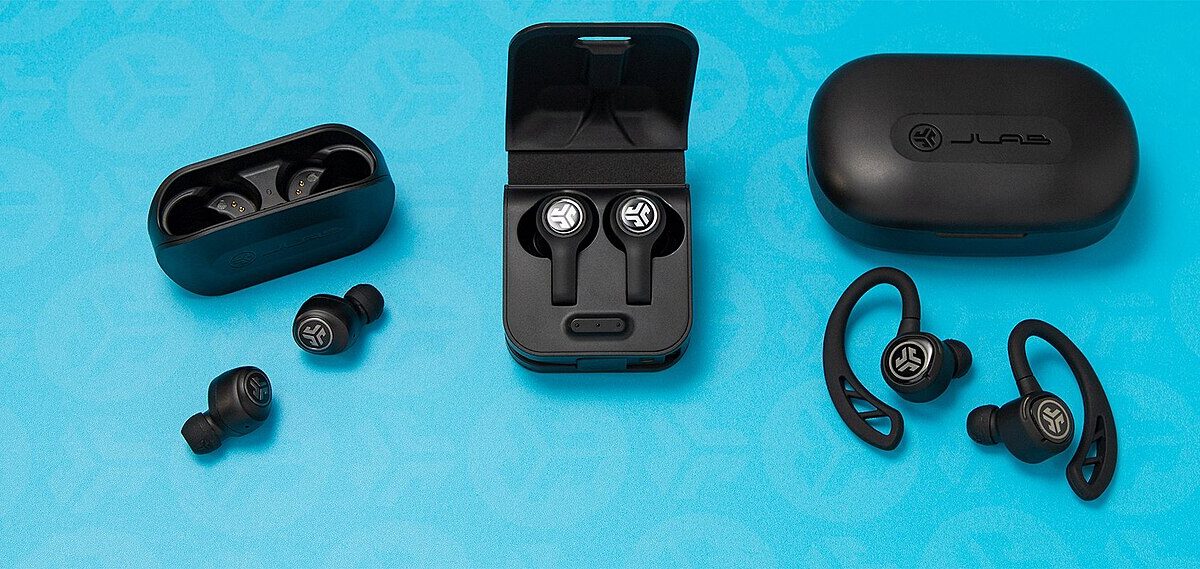
Wireless earbuds all look similar in a product photo, but the day-to-day experience varies enormously — one pair disappears into your routine, another lives in a drawer after a week. In 2026 the good news is that even mid-range models are genuinely excellent; the bad news is that the spec sheets are noisier than ever. This guide cuts through it and tells you what actually changes how earbuds feel to live with.
Fit comes before everything else
If the seal is bad, nothing else matters — bass thins out, noise cancellation collapses, and they fall out on a jog. Before obsessing over drivers or codecs, make sure the pair includes multiple ear-tip sizes (three is the minimum; four or five is better) and, ideally, an in-app fit test that plays a tone and tells you whether each ear is sealed. For workouts, wingtips or over-ear hooks make a real difference in stability. If you have small ears, read reviews specifically about comfort — some popular models are simply too big for a lot of people.
Noise cancellation: what “ANC” really buys you
Active noise cancellation has trickled down from flagships to the mid-range, but quality varies wildly. Good ANC crushes low-frequency drone — plane engines, train rumble, the hum of an office — which is exactly the sound your ears fatigue on. Cheaper ANC mostly muffles and can introduce a faint hiss or pressure sensation. If you commute or work in a noisy space, this is the single feature worth paying up for. Also check the transparency (ambient) mode: the best ones sound natural enough to hold a conversation without removing the buds, which you’ll use more than you expect.
Sound and codecs — in the right order
People obsess over codecs, but for most listeners the tuning matters far more than the codec. A well-tuned pair on standard AAC sounds better than a poorly-tuned pair on a “hi-res” codec. That said, if you have an Android phone and care about higher-bitrate streaming, look for aptX Adaptive or LDAC; on iPhone, AAC is the ceiling and that’s perfectly fine. The genuinely useful extra is an EQ in the companion app so you can shape the sound to your taste — a feature that turns a good pair into a great one for your ears.
Battery and the case
Look for at least 6 hours per charge with ANC on, and 24+ hours total with the case. The case specs matter as much as the buds: check for USB-C (universal now), and ideally Qi wireless charging so you can top up on any pad. A quick-charge feature that delivers an hour or two of playback from a five-minute top-up is genuinely useful on the way out the door. Battery health also degrades over a couple of years — a replaceable-tip, well-built case ages better than a cheap one.
Calls, connectivity, and latency
If you take a lot of calls, mic performance is make-or-break, and it’s the thing cheap earbuds do worst. Read reviews that test calls in wind and background noise specifically, not just a quiet room. On connectivity, multipoint (staying paired to your phone and laptop at once) is a quality-of-life feature you’ll miss once you have it. Gamers and video watchers should look for a low-latency mode so audio stays in sync; Bluetooth 5.3 or newer helps with stability and battery.
Water and sweat resistance
For the gym or running, an IPX4 rating (sweat and splash resistant) is the practical minimum; IPX5-7 buys extra peace of mind in rain. If you only use them at a desk, you can ignore this and prioritize comfort and sound instead.
Matching the price tier to your needs
Budget earbuds (roughly under $50) now cover the basics well — stable Bluetooth, decent sound, USB-C. The mid-range ($50–$130) is the value sweet spot in 2026: solid ANC, multipoint, app EQ, and good battery. Premium ($150+) mainly buys the best ANC, the most natural transparency mode, superior call quality, and tighter ecosystem integration. Only step up to premium if you specifically need those.
The ecosystem factor
Earbuds from your phone’s maker unlock extras: instant pairing, hands-free voice assistant, spatial audio, and seamless switching between that brand’s devices. If you’re all-in on one ecosystem, staying in it is convenient — but you pay a premium for it, and excellent third-party pairs often deliver 90% of the experience for much less.
FAQ
Do expensive earbuds really sound much better?
Up to a point. The jump from cheap to mid-range is dramatic; from mid-range to premium is smaller and mostly about ANC quality, call performance, and app features rather than raw sound.
Is bone-conduction or open-ear worth it?
For runners and cyclists who need to hear traffic, yes — open-ear designs trade some sound quality and bass for situational awareness and all-day comfort.
How long do wireless earbuds last?
Typically two to three years before battery degradation becomes noticeable. Keeping them cool and not always draining to 0% helps, just like any lithium battery.
Deixe um comentário