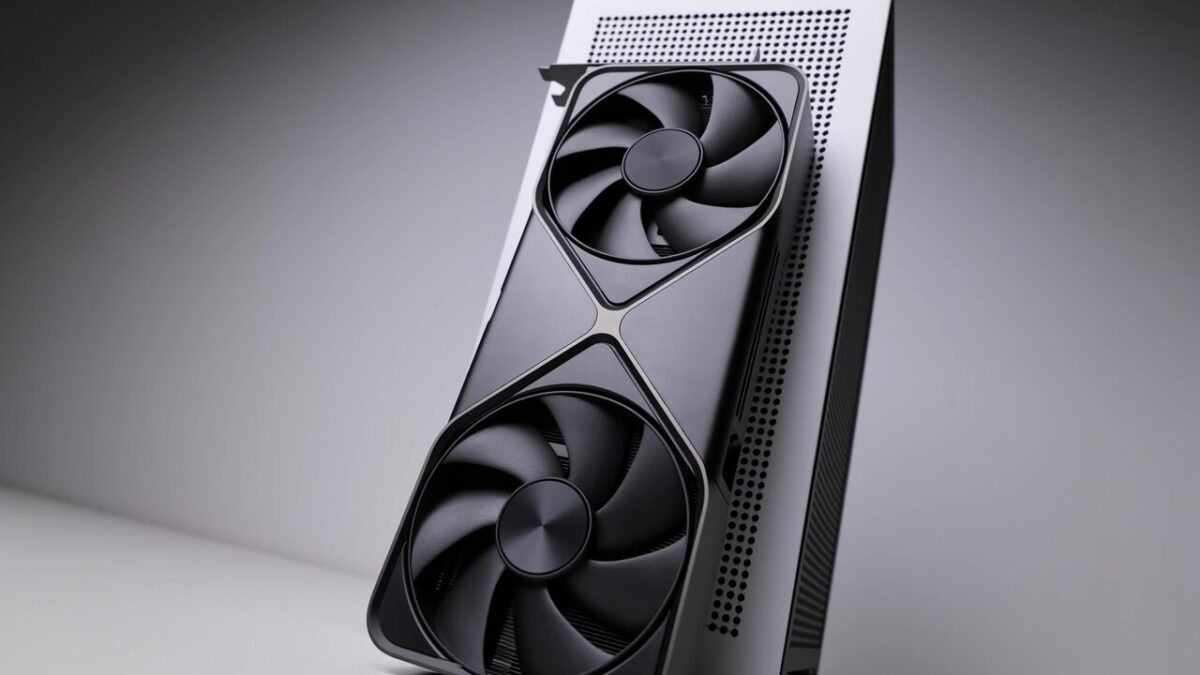
A graphics card that launched at $1,999 now costs more than a used Honda Civic transmission — and Nvidia wants you to believe that’s not really its fault. The RTX 5090 price crisis 2026 has pushed the flagship GPU past $4,300 on Amazon, with premium AIB models clearing $5,000, and the polite industry line is that it’s all downstream of a global memory shortage nobody could have predicted. We don’t buy the polite line, at least not entirely. Nvidia is a victim of the DRAM and GDDR7 squeeze, yes — but it’s also an opportunist that raised its own wholesale price on top of that squeeze, and those are two different things being sold to you as one.
Here’s our position, stated plainly: the RTX 5090’s price is mostly the memory market’s fault, but Nvidia used the crisis as cover to take its own cut. Both things are true at once, and pretending otherwise — in either direction — is where most coverage of this story goes wrong.
What’s Actually Happening With RTX 5090 Pricing in 2026
Start with the numbers, because they tell a story on their own. The RTX 5090 launched at a $1,999 MSRP. By February 2026, street prices had already blown past $3,000. As of this week, Amazon.com lists the card around $4,329, and TechTimes reported on July 11, 2026 that pricing had moved “above $4,300,” with premium partner cards from board manufacturers like Asus clearing the $5,000 mark outright.
That’s a 115% markup over MSRP for the “normal” price, and closer to 150% for the cards enthusiasts actually want. Industry trackers are now forecasting the flagship could average around $5,000 by the end of 2026 — worth flagging clearly as a forecast, not a done deal, since we’re only in July.
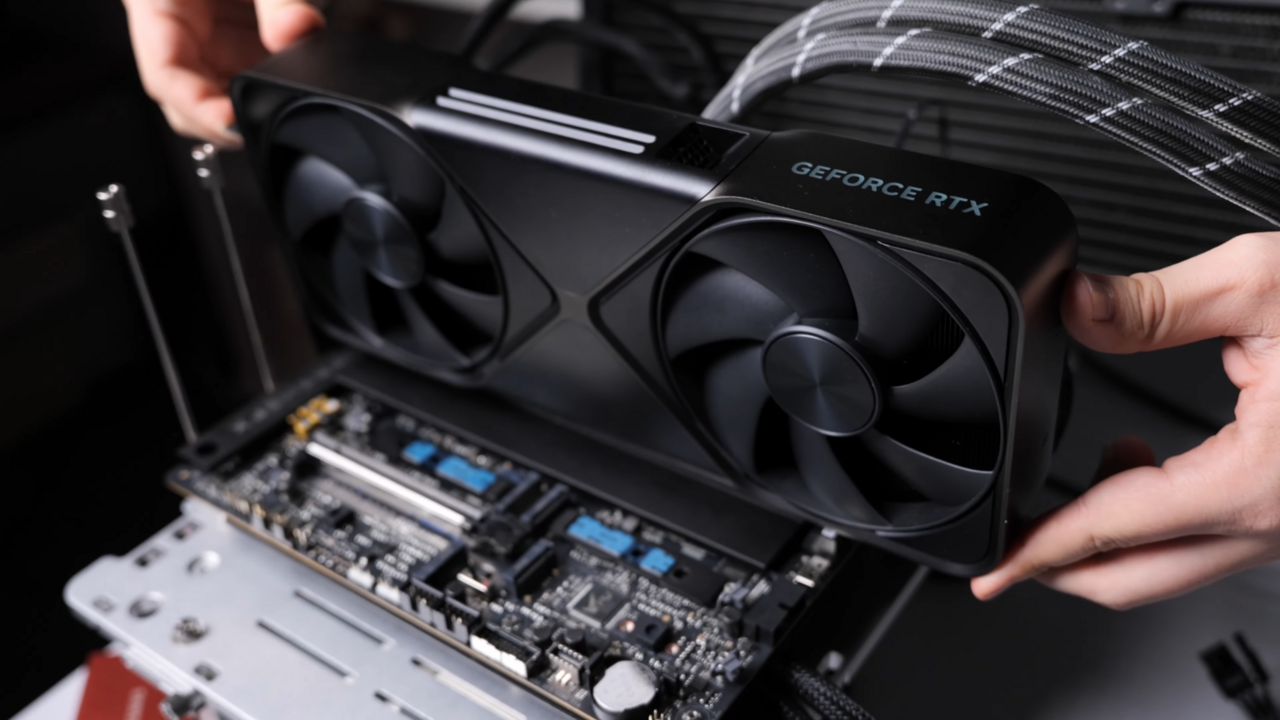
Scalping made an early cameo, too. In the launch-window frenzy, eBay listings for the ROG Astral RTX 5090 Dhahab Edition hit as much as $22,900, and plain reference-design cards were flipped for $9,000-plus while framed-photo listings tried to trick bots into buying decoys instead of real stock. That chaos has since cooled — the average eBay selling price for a used 5090 has settled closer to $4,000, which is barely below new retail. In other words, the “scalper premium” mostly evaporated because the legitimate retail price rose to meet it.
Is the RTX 5090 Price Crisis Nvidia’s Fault, the DRAM Shortage, or Both?
The marketing-adjacent version of this story says: blame the memory market, not Nvidia. And there’s real substance to that defense. VRAM now makes up more than 80% of the bill of materials on a high-end GPU like the 5090 — a number confirmed independently by TechTimes, Astute Group, and PC Game Check. GDDR7 spot prices climbed roughly 40% between Q4 2025 and Q1 2026 alone, and TrendForce clocked broader DRAM contract prices up about 80% quarter-over-quarter in Q1 2026.
The reason is AI, not gamers. IDC projects that AI datacenters will absorb roughly 70% of global memory output in 2026, compared to just 20-30% back in 2022. Samsung and SK Hynix are the same companies making the memory chips going into both your GPU and into Nvidia’s own H200 AI accelerators — and when a hyperscaler will pay any price for HBM, GDDR7 wafer capacity gets squeezed out along with it. Samsung and SK Hynix have both warned the shortage could run into 2027; Intel and Silicon Motion have pointed as far out as 2028. This is not a story that resolves by Black Friday.
Steelmanning Nvidia: the strongest version of “it’s not our fault”
Let’s give Nvidia’s side its fairest hearing. The company doesn’t set retail prices directly — board partners like Asus, MSI, and Gigabyte do that, and they’re the ones absorbing genuinely higher input costs on GDDR7 chips they didn’t choose to make scarce. Nvidia’s own official MSRP, on paper, is still $1,999. If you squint, you could argue Nvidia is just as exposed to the memory crisis as everyone else, since it also has to buy memory for every card it ships, and its GPU business is not the one bidding memory prices up in the first place — AI datacenter demand is, and much of that demand is for Nvidia’s OWN accelerators, which is an odd kind of self-inflicted problem to blame on gamers’ GPUs.
That argument holds up right until you look at what Nvidia actually did in May. On May 13, 2026, Nvidia pushed through a deliberate $300-per-unit wholesale price increase on the RTX 5090 and its China-market variant, the RTX 5090D V2 — a decision that landed directly on board partners’ cost sheets, on top of the memory shortage, not because of it. That’s not a passive victim absorbing market chaos. That’s a company with obvious pricing power choosing to take an extra slice while the market’s attention was already on DRAM headlines. The memory crisis gave Nvidia cover to raise its own price without absorbing the blame for the sticker shock — and that’s the part the “it’s just supply and demand” explanation conveniently leaves out.
What the RTX 5090 Price Crisis Means If You’re Building a PC Now
If you’re speccing a new build in July 2026, the practical takeaway is blunt: the RTX 5090 is not a rational purchase for most gaming builds right now, full stop. At $4,300-plus for the card alone, you’re paying more for a single GPU than most people spend on an entire high-end PC eighteen months ago — and the value math simply doesn’t clear, however good the raw performance numbers are.
This isn’t an RTX-5090-only problem, either. AMD pushed a 10% price increase across its Radeon lineup for the exact same memory-cost reasons, so switching teams doesn’t get you out of the crisis. And it’s not just GPUs — system RAM prices are climbing from the same DRAM shortage, with SK Hynix’s own CEO on record calling 2027 the likely worst year for memory supply. If you’re assembling a whole new rig, budget for higher prices across the board, not just on the graphics card line item.
If your current card still runs the games you play at settings you’re happy with, this is a strong year to sit tight. We’ve made the same case on the notebook side — our laptop buy-now-or-wait breakdown reaches a similar conclusion for the same underlying reason: none of this is temporary in the next few months, and waiting doesn’t cost you the deal you think it does, because there currently isn’t one.
Our Verdict on the RTX 5090 Price Crisis
Our verdict: this is roughly 70% memory market, 30% Nvidia opportunism — and the second number matters more than the industry wants to admit. The DRAM and GDDR7 shortage is real, well-documented across independent sources, and not something Nvidia invented. But Nvidia didn’t just get caught in the crossfire; it reached into the same fire and pulled out an extra $300 per card in May 2026, timed exactly when scrutiny was pointed elsewhere. “Blame the memory market” is true. “Only blame the memory market” is a talking point, not an analysis.
For now, the RTX 5090 is a halo product for people with halo budgets, not a mainstream gaming purchase — and treating it as anything else in mid-2026 is setting yourself up to overpay for a crisis that isn’t fully your problem to fund. If you still want to see where the market actually sits today rather than take our word for it, check current RTX 5090 listings on Amazon before you commit to anything at this price point. (Disclosure: that’s an affiliate link — we may earn a small commission at no extra cost to you, but the verdict above doesn’t change either way.)
Deixe um comentário