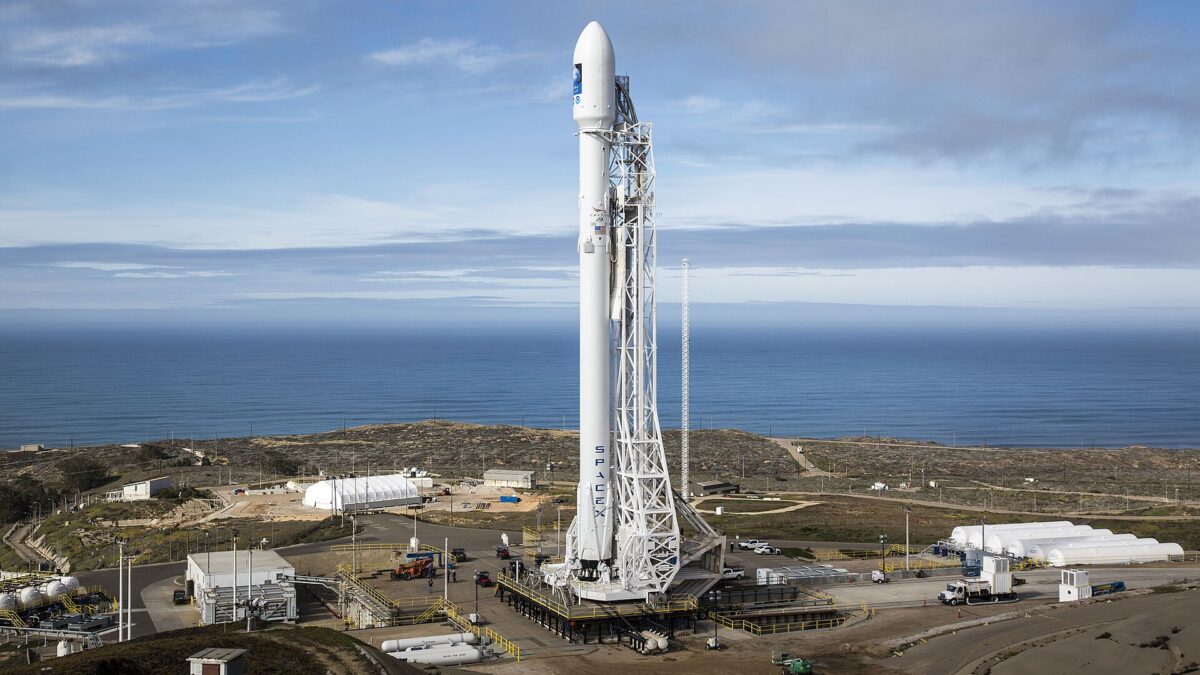
A little over a month ago, SpaceX pulled off the largest IPO in history. This week, its stock closed below the price it opened at. That’s not a typo, and it’s not really the disaster it sounds like — but the mechanics behind it are worth understanding if you’ve ever wondered how a company everyone assumes is a sure thing can look shaky on paper within weeks.
What Actually Happened
SpaceX priced its IPO at $135 a share on June 11, 2026, and started trading the next day. The offering raised roughly $86 billion and valued the company at about $1.77 trillion — the biggest IPO ever run, full stop. Day one alone was a spectacle: shares closed at $161, up 19%, pushing SpaceX’s market cap past $2.1 trillion and making it the sixth most valuable publicly traded company in the US on its very first day of trading.
From there, the stock kept climbing for a bit, clearing $200 within the first couple weeks. Then it started sliding — not in one dramatic crash, but in a slow bleed, losing ground nearly every week since. On July 15, shares dipped intraday to around $133 before clawing back to close at $135.27, right at the IPO price. The next day, they didn’t claw back: SpaceX closed at $131.11, down more than 3%, officially below its IPO price for the first time since going public. After-hours trading got uglier, with shares touching $124 following news that SpaceX had delayed the launch of its Starship rocket — the same test program that aborted a flight mid-countdown earlier this month.

Why This Isn’t Quite the Story It Looks Like
Here’s the detail that actually explains most of the volatility, and it has almost nothing to do with rockets: SpaceX only sold about 4% of the company in its IPO. That’s an unusually small float for a company this size — most mega-cap IPOs release a bigger slice to the public to keep trading orderly. With such a thin slice of shares actually changing hands, it doesn’t take much buying or selling pressure to swing the price hard in either direction. A hedge fund trimming a position, a headline about a delayed launch, a wave of retail traders piling in or bailing out — any of it can move a stock this thinly floated by several percentage points in an afternoon.
That’s the counterintuitive part worth sitting with: a stock price move this size, on a float this small, tells you comparatively little about whether the underlying business is actually struggling. Starlink alone is reportedly generating billions in annual revenue, and SpaceX’s launch manifest — Falcon 9, Falcon Heavy, the growing Starship program, NASA and Space Force contracts — hasn’t gotten thinner because a headline pushed the stock down 3% in an afternoon. Public-market price action and operational health are related, but on a 4%-float stock in its first month of trading, they’re not the same conversation.
An Interesting Tangent: How This Compares to Old-School Aerospace
It’s worth zooming out for a second. Boeing, Lockheed Martin, and Northrop Grumman all trade with floats close to 100% of their outstanding shares — basically anyone can buy in, and the price reflects a much broader pool of investor sentiment absorbing news slowly over time. SpaceX’s IPO structure borrowed more from the Snap and Facebook playbook than from traditional aerospace: sell a small slice, keep founder and early-investor control intact, let the market figure out pricing on thin volume. It’s a very “new space” move for an old-school industry, and it means SpaceX’s stock chart is going to look more like a tech IPO’s first-year rollercoaster than like Lockheed’s comparatively sleepy price history — big swings on relatively small news, for a while, until more shares eventually free up to trade.
This Isn’t the First Blue-Chip IPO to Dip Below Its Offer Price
If the “hyped stock craters below its IPO price within weeks” storyline feels familiar, that’s because it’s basically a rite of passage for high-profile tech listings. Facebook’s 2012 IPO priced at $38 and spent over a year trading below that mark before eventually climbing past $200 — at the time it was treated as a near-catastrophic flop, and in hindsight it was a buying opportunity most people missed because they were staring at the wrong timeframe. Uber priced at $45 in 2019, closed its first day down, and spent the better part of a year underwater before the stock eventually multiplied several times over. Even Meta (the company, not just the 2012 ticker) has had multiple stretches where Wall Street pronounced it dead only for the stock to more than recover.
None of that guarantees SpaceX follows the same arc — a rocket company with a launch cadence to maintain isn’t a social network, and a delayed Starship test carries different operational stakes than a delayed feature rollout. But the pattern is real enough that “dipped below IPO price in month one” is closer to a common first-year milestone than a red flag by itself, especially on a stock this thinly floated.
What This Means Going Forward
None of this means the stock won’t recover — plenty of high-profile IPOs have dipped below their offering price in the early months before settling into a more stable range once the float widens and the hype cycle cools. What it does mean is that reading too much into any single day’s close, in either direction, is a mistake with a stock this thinly traded. If you’re the kind of reader who tracks hardware pricing swings as closely as stock charts, you’ll recognize the pattern — it’s the same “small supply, big headline, big price swing” dynamic we’ve seen play out in GPU pricing chaos this year, just with a few more zeros attached.
Worth remembering too: even a $965 billion valuation doesn’t automatically mean a smooth ride once shares actually start trading — a lesson Anthropic’s bankers are presumably watching closely as they plan their own potential listing later this year. Going public and staying stable in your first year as a public company turn out to be two very different challenges.
This is a look at what happened and why — not a signal to buy, sell, or hold anything. Stock prices, especially on thinly floated new listings, can and do move fast in both directions.
Deixe um comentário