Nvidia is finally coming for the laptop CPU — and it could shake up the Windows PC more than anything in years. The company’s first Arm-based PC chips, the N1 and N1X, were revealed by CEO Jensen Huang on June 1 at Computex, pairing a MediaTek-designed processor with a GeForce GPU that carries the same shader count as a desktop RTX 5070. The first laptops from Dell, Lenovo, Asus, and MSI are expected before the 2026 holiday season.
What Nvidia announced
The N1X is a system-on-chip built for Windows on Arm — the same broad category as Qualcomm’s Snapdragon X laptops, but with Nvidia’s graphics muscle behind it. It is essentially a consumer version of the GB10 “superchip,” repackaged for mainstream laptops, and it marks Nvidia’s first serious push into the CPU that powers a PC, not just the GPU bolted onto it.
Nvidia and Microsoft have been teasing “a new era of PC” together, and the hardware explains the confidence: this is the first time an Arm Windows laptop will ship with a genuinely high-end Nvidia GPU on the same package.
The specs that matter
According to leaks and Nvidia’s own reveal, the top N1X packs:
- CPU: 20 Arm v9.2 cores — split into 10 performance and 10 efficiency cores — sharing 32MB of L3 cache, designed by MediaTek.
- GPU: 6,144 CUDA cores across 48 streaming multiprocessors — the same shader count as the desktop GeForce RTX 5070 — plus fifth-generation Tensor Cores and dedicated ray tracing hardware.
- Memory: starting at 16GB of LPDDR5X, scaling up to 128GB across 16 channels.
- Build: two chiplets on TSMC’s 3nm process — a MediaTek CPU die and an Nvidia Blackwell GPU die — linked at 300 GB/s via Nvidia’s NVLink C2C interconnect.
- Power: a 45W–80W envelope, laptop-appropriate rather than desktop-hungry.
The short version: an Arm laptop with RTX-class graphics and CUDA support baked in. That last part is a big deal — CUDA is the software layer that most AI and creative apps are built on, and having it native on an Arm laptop removes a longstanding reason to stick with Intel or AMD.
Why this could actually matter
Windows on Arm has promised great battery life and instant wake for years, but it has always come with a graphics and compatibility asterisk. Nvidia bringing a real GPU — and CUDA — to the platform attacks exactly that weakness. If it works as advertised, you get the efficiency of Arm with graphics that can genuinely game and accelerate AI workloads, a combination no Arm laptop has offered before.
If ray tracing and upscaling on a thin-and-light interest you, that GPU is where the story gets fun — our explainer on what ray tracing actually does covers why an RTX-class GPU changes what a laptop can do.
The catch
Two big caveats. First, Windows on Arm still relies on emulation for apps not compiled for Arm, and while that has improved, it is not flawless — some games and older software can stumble. Second, timing and price: the N1X arrives right as memory prices are spiking industry-wide, which could push these first-generation machines into premium territory. Early hardware also tends to carry an early-adopter tax.
There’s also the competition to reckon with. Qualcomm has spent two years building out its Snapdragon X Arm laptops, and Intel and AMD aren’t standing still — Nvidia is entering a market where rivals already have a head start on software compatibility and OEM relationships. Raw GPU power is a strong opening move, but winning laptops is as much about drivers, app support, and battery tuning as it is about spec-sheet muscle.
What’s next
Expect the first N1X laptops from Dell, Lenovo, Asus, and MSI to appear before the 2026 holidays, with wider availability and the standard N1 chips rolling out into early 2027; an N2 series is already rumored for the year after. Whether Nvidia can crack the laptop market on its first try is genuinely uncertain — but for the first time, the Windows-on-Arm pitch has the graphics to back up the battery life. If you are shopping now instead, our picks for the best laptops under $700 cover the traditional x86 options. (Specs per Tom’s Hardware, Tom’s Guide, and TechTimes.)
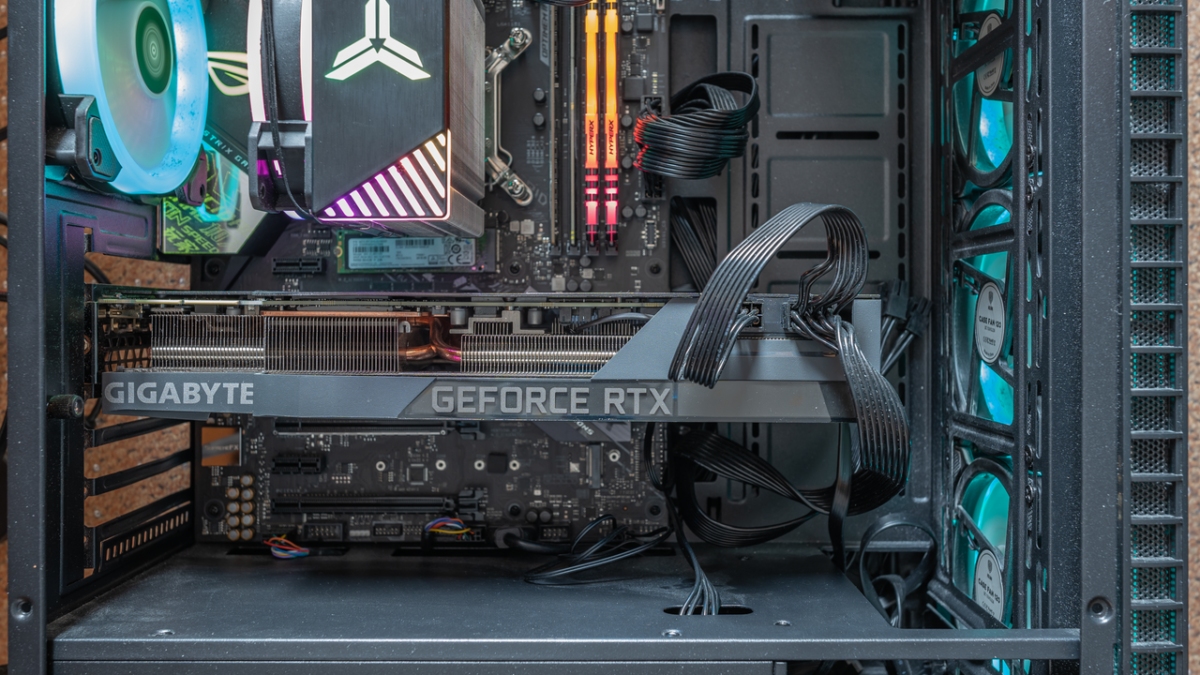
Featured image: Gaming PC interior by PantheraLeo1359531, Wikimedia Commons (CC BY 4.0)
Deixe um comentário