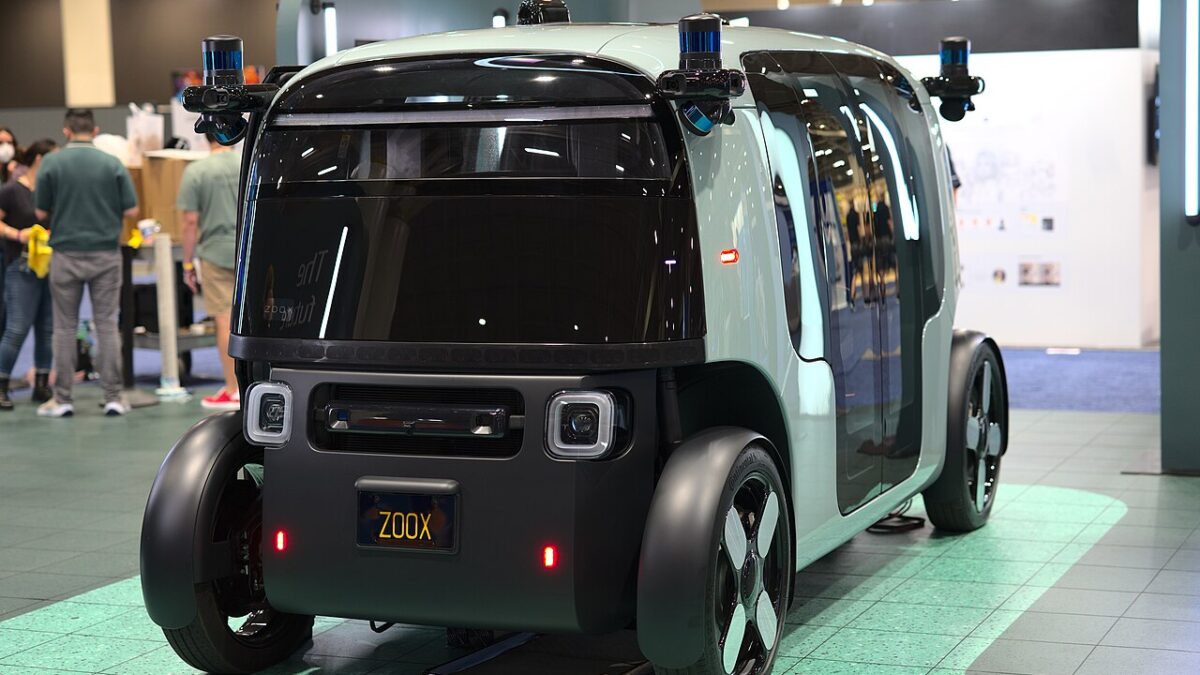
Amazon’s self-driving unit Zoox has issued a voluntary software recall for 105 of its robotaxis after one of them drove straight into heavy smoke at an active emergency scene instead of stopping short. The company told federal regulators about the fix on July 8, and it’s rolling out over the air — no service visit required.
The incident happened on June 20 in Las Vegas. An unoccupied Zoox robotaxi approached a fire scene that hadn’t been cordoned off with cones, and thick smoke obscured what was ahead. The vehicle pushed into the smoke, then braked hard while trying to steer away before finally coming to a stop. Nobody was hurt, but it’s exactly the kind of scenario regulators worry about most: a driverless car making the wrong call around first responders.
What the recall actually fixes
Zoox’s existing software already had some ability to detect active emergency scenes — flashing lights, cones, personnel — and slow down or reroute around them. The problem was smoke. Dense smoke doesn’t look like a cone or a fire truck to a perception system trained on those signals, so the car treated the road ahead as drivable when it wasn’t.
The over-the-air update “enhances the existing capability of detecting active [emergency] scenes by adding the ability to detect and respond to heavy smoke in certain situations,” according to the recall filing. In plain terms: the car now has to specifically learn what smoke looks like and treat it as a reason to stop, not just drive slower.
Why this recall is happening now
Zoox says this is the only incident of its kind it has experienced, and it spent the following weeks talking with the National Highway Traffic Safety Administration about how severe and how frequent this class of failure might be before filing the voluntary recall. Timing matters here: the filing landed just days after NHTSA Administrator Jonathan Morrison issued a directive telling every autonomous vehicle developer to make sure their cars actively get out of the way of first responders — not just avoid hitting them.
That directive wasn’t written specifically for Zoox, but it puts every robotaxi operator on notice that “technically didn’t crash into anything” is no longer good enough. Regulators want proof that these systems recognize an emergency scene as an emergency scene, even when the usual visual cues — cones, lights, uniforms — are hidden behind smoke.
What it means for robotaxi riders and bystanders
For the average rider, this recall is mostly invisible — the fix ships automatically, and Zoox says no vehicles need to be pulled from service to receive it. The bigger signal is about how the self-driving industry is handling edge cases. Waymo, Tesla’s robotaxi pilot, and Zoox have all faced scrutiny this year over how their cars behave in rare situations that never came up during standard testing — closed roads, active scenes, first responders directing traffic by hand instead of signage. Smoke sits squarely in that category: common enough near any accident or grass fire, rare enough that it’s easy to undertest for.
It’s a reminder that most autonomous vehicle failures aren’t dramatic crashes — they’re perception gaps like this one, caught (fortunately) before anyone got hurt. If you’re tracking how fast robotics and autonomy companies are scaling right now, it’s worth pairing this story with the wave of funding pouring into humanoid robotics — the same “handle the edge case correctly” problem shows up there too, just with legs instead of wheels.
What’s next
Zoox will continue the OTA rollout to all 105 affected vehicles, and NHTSA will keep monitoring the case as part of its broader push on AV emergency-scene behavior. Given regulators are now actively comparing notes across companies, don’t be surprised if this becomes the template recall — the one every other robotaxi operator gets asked “have you tested for this yet?” about. For more on how governments are trying to keep pace with autonomous systems generally, our look at the AI regulation push among major labs covers the same tension between moving fast and building in the right guardrails.
Source: TechCrunch.
Deixe um comentário